
Three-hour parking validation available • Details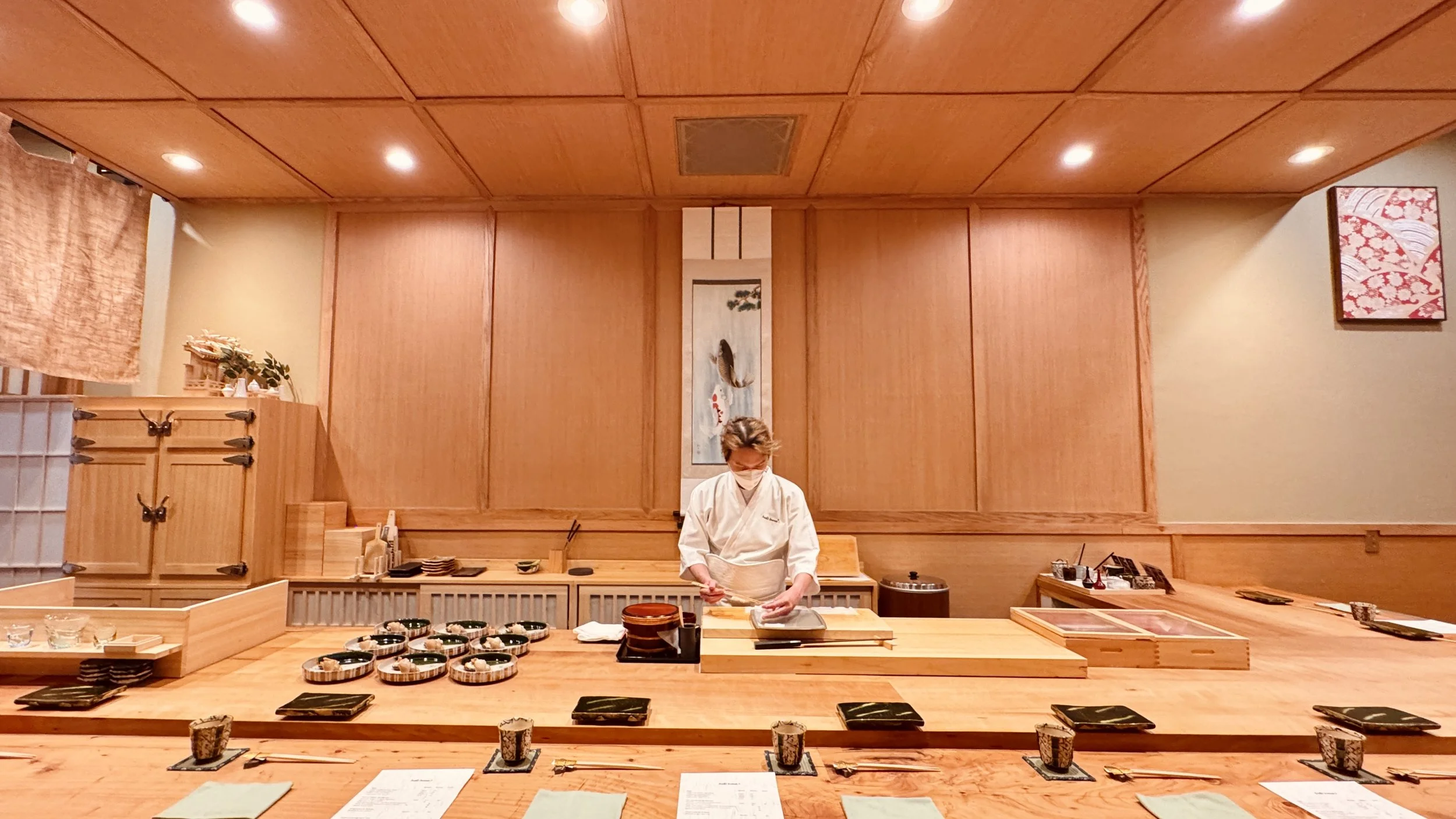
THE DISCIPLINE OF EDOMAE. A VOICE OF HIS OWN.
Chef Jason Sen Li’s most significant recent influences are Yoshitaka Ishibuchi of Sushi Sanshin, Osaka’s internationally acclaimed sushi counter, and Soshi Satani of Soshi in Hiroshima. Both have taught him directly, sharing advanced techniques and signature preparations that have deepened his understanding of sushi.At Sushi Kinsen in Redwood City, his seasonal omakase reveals each ingredient’s fullest natural flavor through precise technique and restrained creativity. With his mentors’ encouragement, he draws on that foundation to express a style distinctly his own, paying particular tribute to Ishibuchi.Sunny Noah, who has worked with leading Bay Area chefs and founded Ren, Iki, and Tancho, affectionately calls Jason a “sushi nerd.” He has followed his chefs from their early days at the counter and knows their training, influences, and work through preparation and service. In his view, Jason’s Edomae knowledge and command of demanding preparations set him apart among the chefs at these restaurants and Kinsen—a judgment shared by many chefs and seasoned connoisseurs who have dined across these restaurants and leading sushi counters worldwide.At Kinsen, Sunny serves as Jason’s consultant and personal supporter, with no ownership interest.CHEF JASON SEN LI
MENTORS AND INDEPENDENT EXPRESSION
In Osaka, Jason worked and studied in Sushi Sanshin’s kitchen, receiving direct instruction from Yoshitaka Ishibuchi.During their October 2026 visit to Kinsen, Ishibuchi and Soshi spent two days observing Jason’s preparation and tasting his omakase. They praised his technical command, ingenuity, and understanding of sushi, encouraging him to trust his judgment and establish Kinsen Jason’s own style. Soshi called him a “genius.”Their instruction expanded Jason’s technical range and sharpened his ability to assess an ingredient’s condition and choose its preparation. He draws particular inspiration from Ishibuchi’s approach to originality: preserving an ingredient’s character while giving each piece an identity distinctly Sanshin’s.Years of experimentation at Tancho and Kinsen have taught Jason how difficult advanced preparations are to develop and execute. He understands the time, sacrifice, and repeated failures behind his mentors’ work. He treasures their trust and honors their teaching through the care he takes in his own practice.Jason has also learned from New York–based Chef Kunihide “Nakaji” Nakajima.EARLY TRAINING
Jason began making sushi at 18, building years of counter experience before entering fine-dining omakase.In early 2018, he joined the opening team of a San Francisco restaurant originally conceived as Hashida Sushi, which ultimately opened as Sushi Nagai. With limited time before opening, the Japanese team selected him for intensive counter training, recognizing his experience, discipline, and precision.Chef Seto, a key member of the opening team, became his first and most formative omakase mentor. During nearly a year of close instruction, Jason studied sushi and the broader traditions of washoku, including seasoning, simmering, fish preparation, knife work, timing, presentation, and respect for seasonality.Before returning to Japan in 2019, Seto entrusted Jason with his treasured personal recipe notebook—more than 400 pages of accumulated knowledge—and encouraged him to study it for years to come. Jason carries that gift as both a resource and a responsibility.He also learned from Chef Hajime, other Japanese members of the opening team, and visiting chefs from Japan. Their instruction established the habits of careful preparation and repeated practice that continue to guide his work.TANCHO TO KINSEN
At Sushi Nagai, Jason met restaurateur Sunny Noah. After the restaurant closed during the pandemic, Jason worked in Bay Area Japanese kitchens while he and Sunny prepared to open Tancho Japanese Restaurant in Castro Valley.Tancho opened in winter 2021, with Jason as chef-owner and creator of its original omakase program.He made the restaurant his laboratory, testing Chef Seto’s recipes and developing his own preparations. He returned to difficult dishes repeatedly, studying and adjusting them until the results met his expectations. That work gradually shaped his approach to sourcing, preparation, presentation, and the progression of a meal.Tancho also welcomed Bay Area chefs for culinary exchange. Some observed preparation and service; others explored ideas and presented their own cooking through guest pop-ups.In late 2024, Jason helped establish Nagai Edomae Sushi in Redwood City. Following its closure, the restaurant reopened as Sushi Kinsen in October 2025, with Jason as head chef.A SEASONAL OMAKASE
BEGINNING NOVEMBER 2026
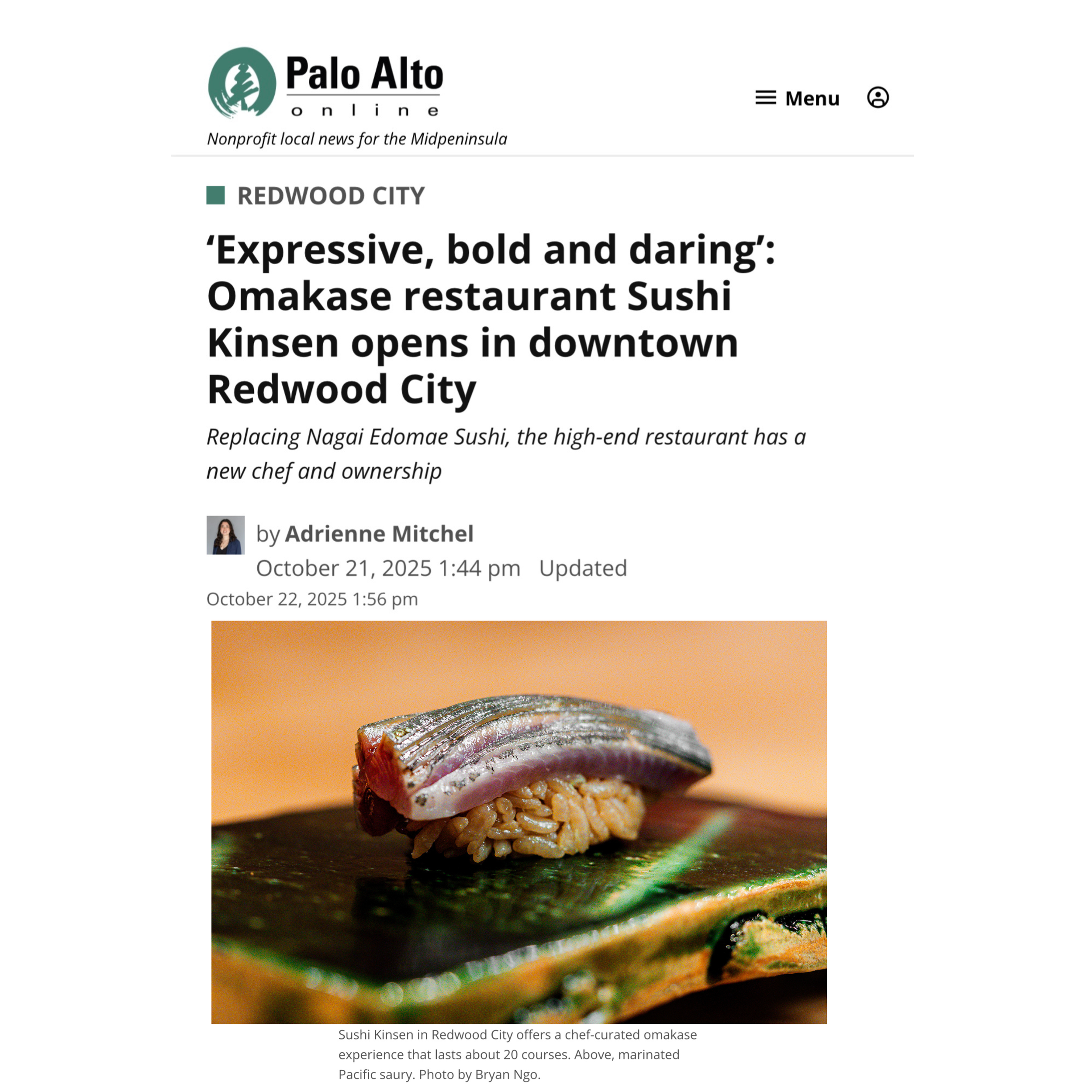
This November, Chef Jason introduces a seasonal omakase honoring five formative mentors: Seto, Hajime, Nakajima, Soshi, and especially Ishibuchi. Their teaching informs a menu of original preparations shaped by his own experience and understanding of Edomae.Seafood sourced through trusted suppliers at Tokyo’s Toyosu Market is complemented by exceptional local ingredients. Each ingredient’s season, condition, and character guide its preparation, from careful aging and precise curing to marinating, simmering, and detailed knife work.Kohada and other hikarimono hold a particular place in Jason’s cooking. He works to develop their depth and tenderness while preserving the flavors that distinguish each fish. Throughout the menu, he pays close attention to the relationship between seafood and akazu-seasoned rice.The selection changes with the season. Courses are arranged with attention to how one follows another, giving delicate flavors room to be appreciated and richer preparations their place in the meal.Jason’s aim is an omakase of clear flavors and precise balance, shaped by the season and distinctly his own.We look forward to welcoming you to Sushi Kinsen.